
 简体中文
简体中文 Vietnamese
 Persian
 繁体中文
繁体中文 Albanian
 Irish
Irish Arabic
Reagent and solvent preparation: In the development process of synthesizing new materials, pure water is usually required to prepare reagents and solvents. Pure water can ensure the reaction conditions and material purity in the experiment.
In the preparation of new material reagents and solvents, the parameters of pure water usually refer to its purity and the water quality requirements during the preparation process. Here are some common parameters for pure water:
Purity: The purity of pure water refers to the degree to which it contains no impurities. Usually, the purity requirement for pure water is very high, and ultrapure or high-purity water is usually used. The purity of ultrapure water can reach a resistivity of up to 18 megaohm centimeters (M Ω • cm), while the purity of high-purity water is usually within the range of 1-10 megaohm centimeters.
Electrical resistivity: The electrical resistivity of pure water is one of the important indicators for measuring its purity. The higher the resistivity, the lower the impurity content in the water. In the preparation of reagents and solvents, it is generally required to use pure water with high electrical resistivity.
Conductivity: Contrary to electrical resistivity, conductivity refers to the ability of dissolved substances in water to conduct electricity. The conductivity of pure water is very low and is usually used to indicate the purity of water. In the preparation of reagents and solvents, pure water with low conductivity is more suitable for ensuring the purity of reagents and solvents.
Microbial content: The microbial content in pure water is also an important parameter. In the preparation of reagents and solvents, it is necessary to ensure that the content of microorganisms in pure water is as low as possible to avoid contamination of reagents and solvents.
Oxygen content: Oxygen can have an impact on certain reagents and solvents, so it may be necessary to control the oxygen content in pure water during the preparation process.
In practical operations, high-purity pure water is usually prepared through methods such as reverse osmosis, ion exchange, and electrodeionization to meet the requirements of reagent and solvent preparation. At the same time, it is necessary to monitor and adjust the quality of pure water during the preparation process to ensure that it meets the requirements for preparing new materials.
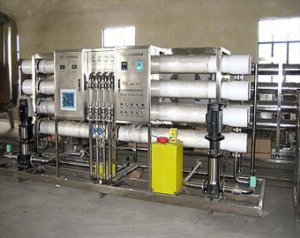
Jiajie's 1-100T/H pure water equipment can meet this requirement
Sample cleaning: In the laboratory, the cleanliness of the sample surface has a significant impact on the results during the preparation and performance testing of new materials. Pure water is often used to clean samples and remove surface impurities and residues.
Equipment cleaning: In the operation of research and production equipment, it is sometimes necessary to regularly clean the equipment to ensure its normal operation. Pure water can be used as a cleaning agent to help remove equipment
Surface dirt and deposits.
In the cleaning of new material equipment, pure water is required, and its parameters are usually closely related to the cleaning effect and equipment protection. The following are the pure water parameters that need to be considered in equipment cleaning:
Purity: The pure water used during the cleaning process needs to be of high purity to ensure the cleaning effect and the cleanliness of the equipment surface. The higher the purity, the more effective it is to remove dirt and residues.
Electrical resistivity: Pure water with high electrical resistivity is usually more suitable for equipment cleaning because it means that the content of impurities and dissolved substances in the water is lower, which is conducive to thoroughly cleaning the surface of the equipment.
Microbial content: During the equipment cleaning process, the presence of microorganisms may cause the equipment to be contaminated again, so the microbial content in pure water needs to be as low as possible.
Dissolved oxygen content: During the cleaning process, the presence of dissolved oxygen may cause corrosion on the metal surface. Therefore, using pure water with low dissolved oxygen content can better protect the surface of the equipment.
Dissolved ion content: Some ions, such as chloride ions, sulfates, etc., may cause corrosion or pollution to the surface of the equipment. Therefore, it is best to use pure water with lower content during the cleaning process to reduce the impact of these ions on the equipment.
PH value: The pH value of pure water should be close to neutral to avoid adverse effects on the surface of the equipment.
Laboratory glassware cleaning: Glassware used in the laboratory also needs to be cleaned regularly to maintain its cleanliness. Pure water can be used to clean glassware to avoid interference from impurities on experimental results.
Experimental condition control: Some experiments require strict control of environmental conditions, such as temperature, humidity, etc. Pure water can be used to regulate laboratory environmental conditions to ensure the reproducibility and accuracy of experiments.
Preparation of pure reagents: Some experiments require the use of high-purity reagents, and pure water can be one of the basic solvents for preparing high-purity reagents.
Finished product washing: In the production process of new materials, the final product may need to be washed to remove residual chemicals or impurities. Pure water can be used for washing the final product to ensure its quality and purity.
These are common applications of pure water in the development and production of new materials, which helps ensure the accuracy, repeatability, and quality of the final product in experiments and production.
专业水处理的疑难问题,产品选型问题,可以单击下面的微信二维码电话联系贺工在线指导,长按微信二维码可自动识别添加贺工微信沟通解决您的疑难问题